
You put on two chains in the morning, and by lunchtime they have become one chain with a knot in it. That is not bad luck and it is not a cheap clasp. It is arithmetic: two loops of similar length hang along the same curve of your chest, and every time you move they cross. Give them different curves and the problem disappears.
The number that does it is two inches. Below that gap, chains share a path; at two inches or more, they sit on separate lines and stay there. Everything else about layering, from which pendant to how many strands, is taste. The gap is mechanics.
Build the stack from the shortest up
Start with the piece you want closest to the throat and work down. A 14 to 16 inch chain is the anchor: it sits on the collarbone, it is the one that shows above a crew neck, and it should be the plainest of the three. A charm up there competes with your face rather than framing it.
The second strand goes at 18 inches, which is where a pendant lands just below the collarbone. This is the strand that carries the piece you actually want people to notice: a letter, a cross, a single pearl. The third, if you want one, goes at 20 inches or longer and works best with something with weight to it, because a long thin chain without a pendant reads as a stray.
- Anchor at 16 in: plain chain, no charm.
- Feature at 18 in: the pendant you want seen.
- Drop at 20 in or longer: only with something to hold it down.
Where our lengths fall
Our letter pendants and sideways crosses are 16.5 inches with a two inch extender, so a single piece covers 16.5 to 18.5. That is useful for layering in a way a fixed chain is not: wear one letter closed as the anchor and a second letter open as the feature, and the two inch gap builds itself.
| Piece | Chain | With the extender open |
|---|---|---|
| Letter pendant | 16.5 in | 18.5 in |
| Sideways cross | 16.5 in | 18.5 in |
| Baroque pearl pendant | 15.7 in | 17.7 in |
| Coin choker | 13 in | 15 in |
| Beaded lariat | 16.5 in | open-ended, hangs longer |
When a joined set is the better answer
A layered set is two or three strands fixed to one clasp at the back. It cannot tangle with itself, because the strands cannot swap places, and the gap between them was set by whoever designed it rather than by whatever you happened to own. If you have tried layering twice and given up, this is the piece to try third.
The trade is flexibility. A joined set is one look; two separate chains are several. Most people end up with both: a set for the mornings when nothing is going right, and a box of singles for the days they feel like building something.
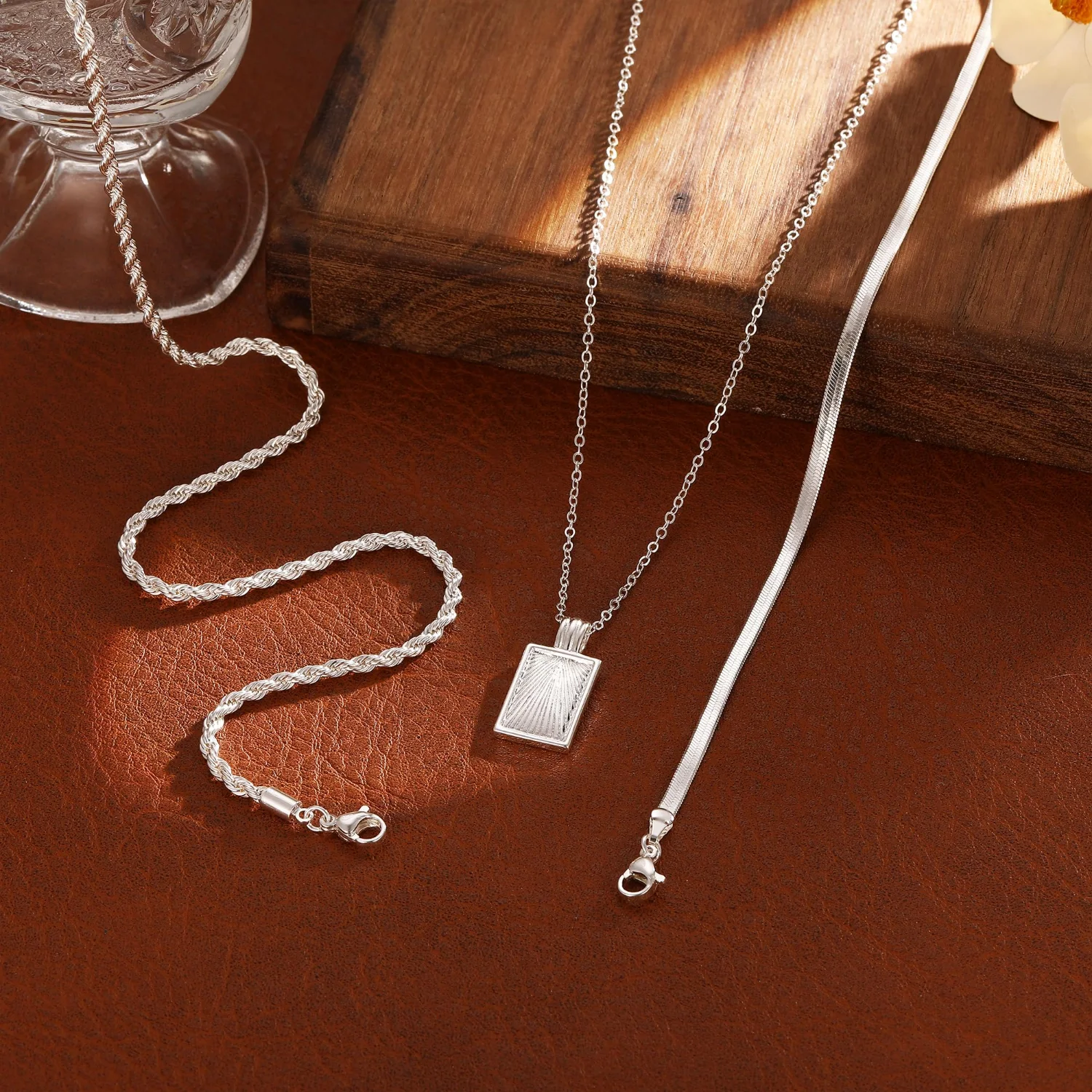
Mixing gold and silver
The old rule said never. The rule is gone, and it deserved to go, because mixed metals read as deliberate as long as something repeats. The easiest way to make it look intentional is to wear one piece that contains both tones, or to put the odd metal out on the strand furthest from your face, where it reads as a highlight rather than a mistake.
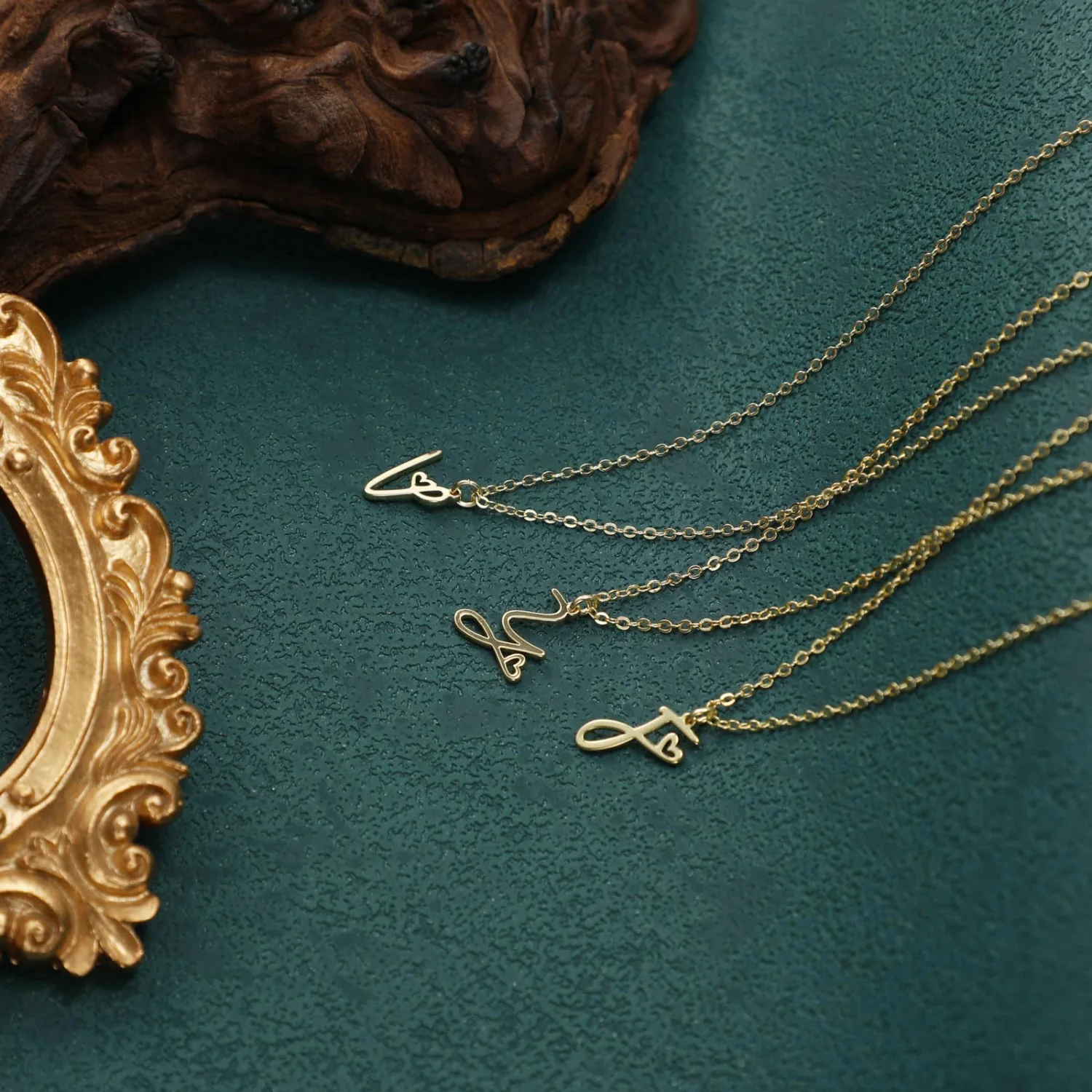
If you want to test it cheaply, our letter pendants come in the same design in gold plate and silver plate. Wear both letters, one at each length, and see whether you like the effect before you commit a whole jewelry box to it.
Three habits that save a stack
Fasten every clasp before you put a chain down, even for an hour. An open chain in a pouch finds the other chains and threads itself through them.
Lay a stack flat rather than dropping it in. Flat chains cannot spiral; dropped ones do it within minutes.
Take the stack off in the same order you put it on. Pulling all three over your head at once is how a knot gets pulled tight rather than merely formed.