
An initial is the safest piece of jewelry to give someone. You do not need their ring size, you do not need to guess a style, and the meaning is built in. It is also the piece most often bought slightly wrong, usually in one of four ways: the wrong initial, the wrong length, the wrong metal, or a letter that does not suit the person wearing it.
None of the four is hard to get right. They just need thinking about before you order rather than after it arrives.
Which letter
First names are the obvious answer and not always the right one. A surname initial suits someone who goes by a nickname; a child's initial suits a parent who would rather wear their daughter than themselves; two letters on two chains, at different lengths, is how people wear a partnership without wearing a ring.
Ask yourself which letter the person would say out loud if someone asked what it stood for. If the answer is a sentence rather than a word, it is the right letter.
Which metal tone
Look at what they already wear. Not at their skin tone, at their jewelry: the watch, the earrings they never take out, the ring on the other hand. Someone with a drawer of silver will wear a gold letter twice and then stop, and it will not be because the letter was wrong.
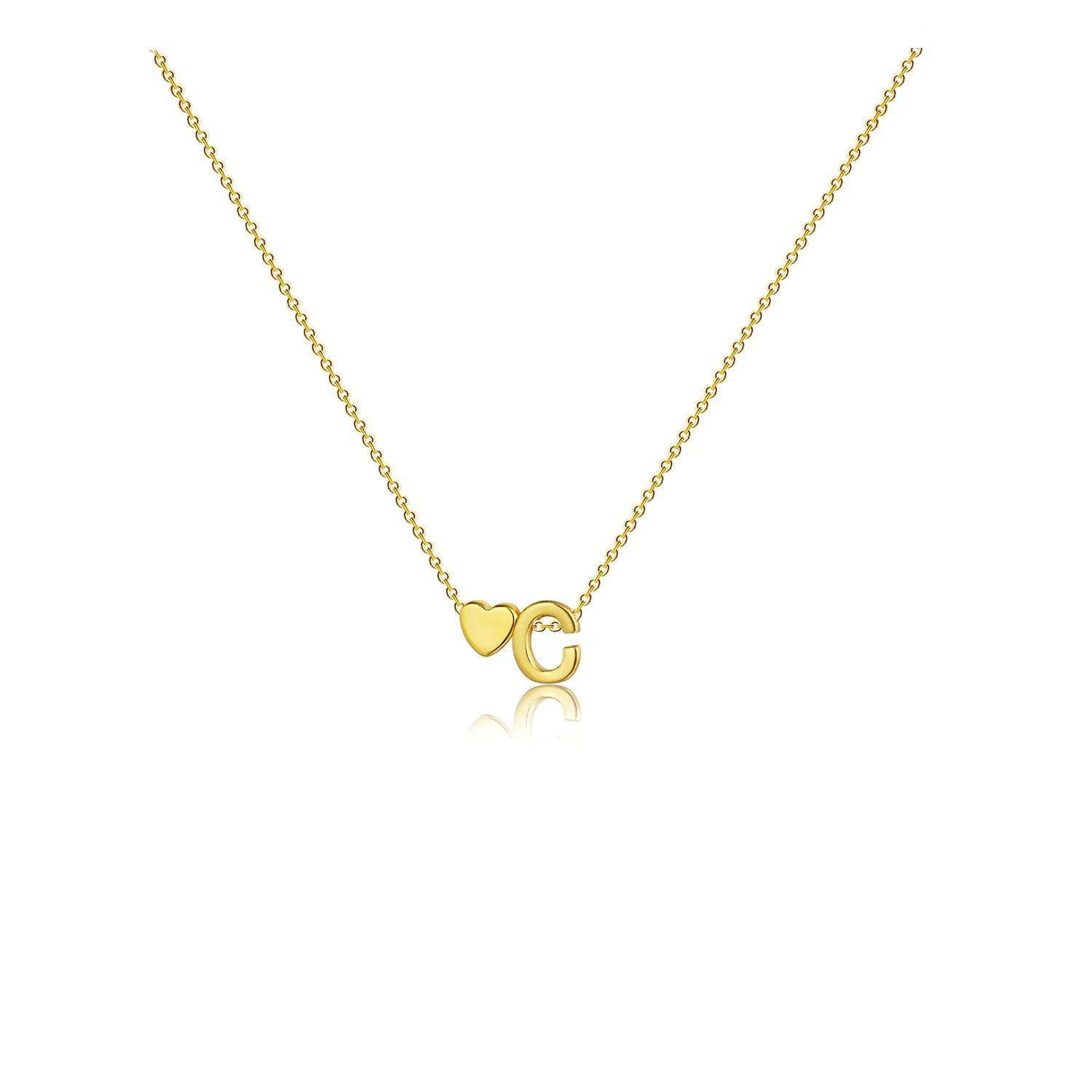
If you genuinely cannot tell, gold plate is the safer default on a plated piece, because it hides a scratch better and it warms against most skin. Our letter pendants run in 14K gold plate and in silver plate, same chain, same clasp, so the only difference is the tone.
What length
Sixteen to eighteen inches is where a single letter belongs. On the short setting it sits on the collarbone where a pendant reads as jewelry; much longer and a small letter disappears into a neckline and reads as a stray chain.
Ours are 16.5 inches with a two inch extender, which covers 16.5 to 18.5 and takes the decision away from you. That is the main reason to buy an initial with an extender when you are buying for someone else: you are not really guessing a length, you are giving them a small range to choose inside.
| Who you are buying for | Length that usually works | Why |
|---|---|---|
| Someone who wears crew necks | 16 to 16.5 in | The letter shows above the collar rather than under it |
| Someone who wears open collars | 18 in | The pendant lands in the opening instead of on the fabric |
| Someone who already layers | 16.5 in with an extender | Fits the stack at either setting |
| A teenager | 16 in | Shorter chains sit better on a smaller frame |
Script or block
A script letter is drawn, so it has a stroke that thickens and thins and a shape you recognise from handwriting. A block letter is cut from a plate and reads as a symbol. Script suits most people better at small sizes, because the varying stroke catches light where a flat letter goes dull.
It also changes what some letters look like. A script O closes into a circle and reads as a shape rather than a letter, which some people like and some do not; a J keeps its tail and hangs slightly off-center, which always looks deliberate. If you are buying an O, look at the photograph and decide whether the person would want the letter or the shape.
What to say when you give it
Say what it is made of. A plated piece is a finish over brass, and the person will find out either way, and better from you, with the sentence "take it off before the shower and it will keep its color", than from a green mark three months later.
Everything on the initial necklace page is plated, and the care guide is two paragraphs long. Between them they cover everything a first plated piece needs.